


Bathroom Tile Ideas: Inspiring Designs for Walls, Floors & Showers
2026-10-14
Author: Lucy Forbes – PR & Communications
Bathroom tiles can transform walls, floors and showers through their size, pattern, texture and layout. Large-format tiles create a cleaner, calmer finish, while mosaics and smaller tiles add detail. The best bathroom tile ideas coordinate these surfaces without making everything match, creating a practical design that feels balanced and personal.
Tiles do far more than protect bathroom walls and floors from water. Their size, shape, finish and position can alter how the whole room looks. A carefully placed pattern might draw attention to the shower, while large tiles can give a busy bathroom a calmer finish.
The best bathroom tile ideas consider the floor, walls and shower together. They do not all have to match, but there should be a connection between them. The connection might come from a shared colour, similar surface texture or repeated pattern.
This guide looks at practical bathroom tiling ideas, from large-format floors and mosaics to different layouts and textured finishes. Whether you are planning a complete renovation or changing one section of the room, there is plenty of inspiration for bathrooms of every size.
Discover floor tiles that bring warmth, texture and character to your home.
Explore Beige Floor Tiles →
Large Format Bathroom Tile Ideas
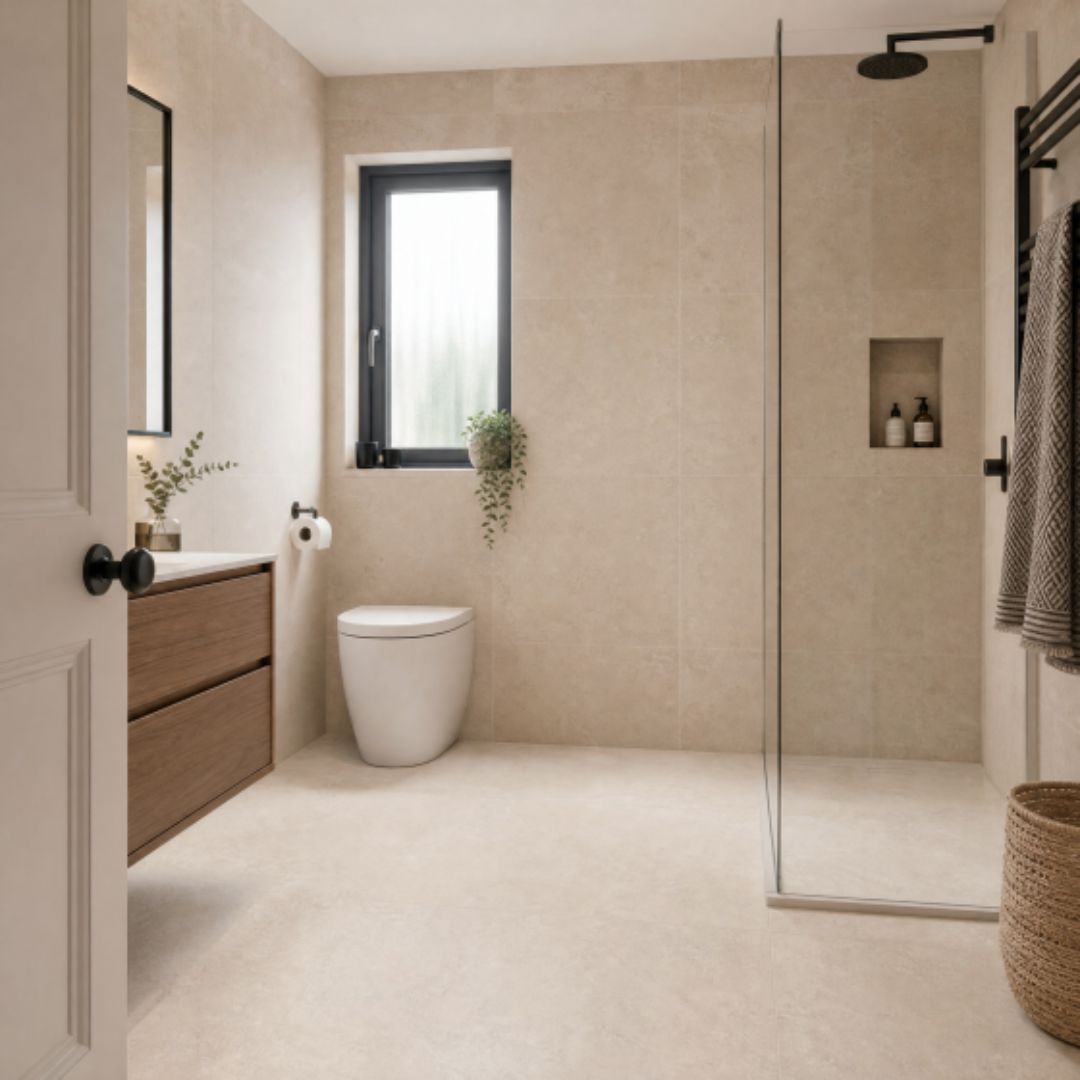
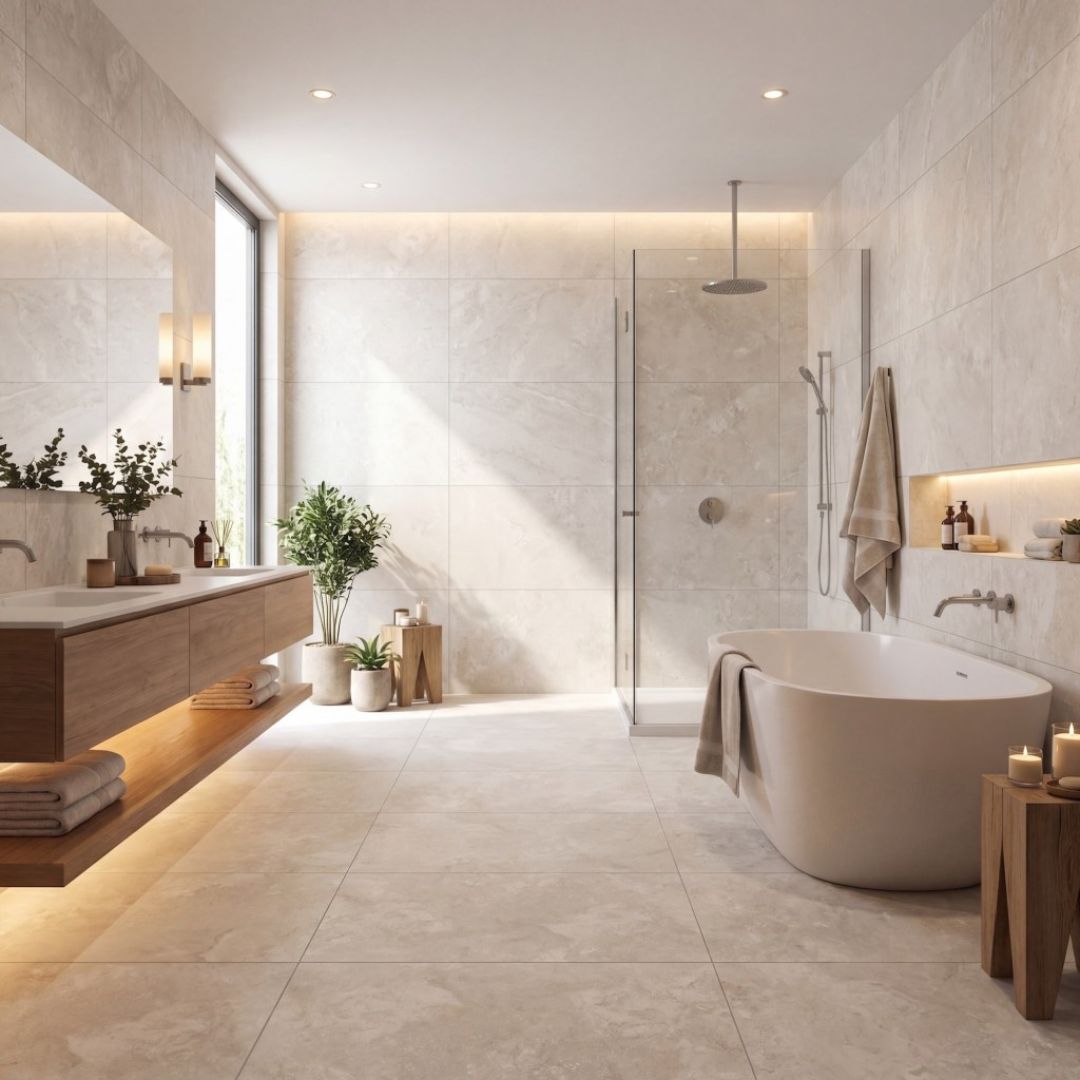
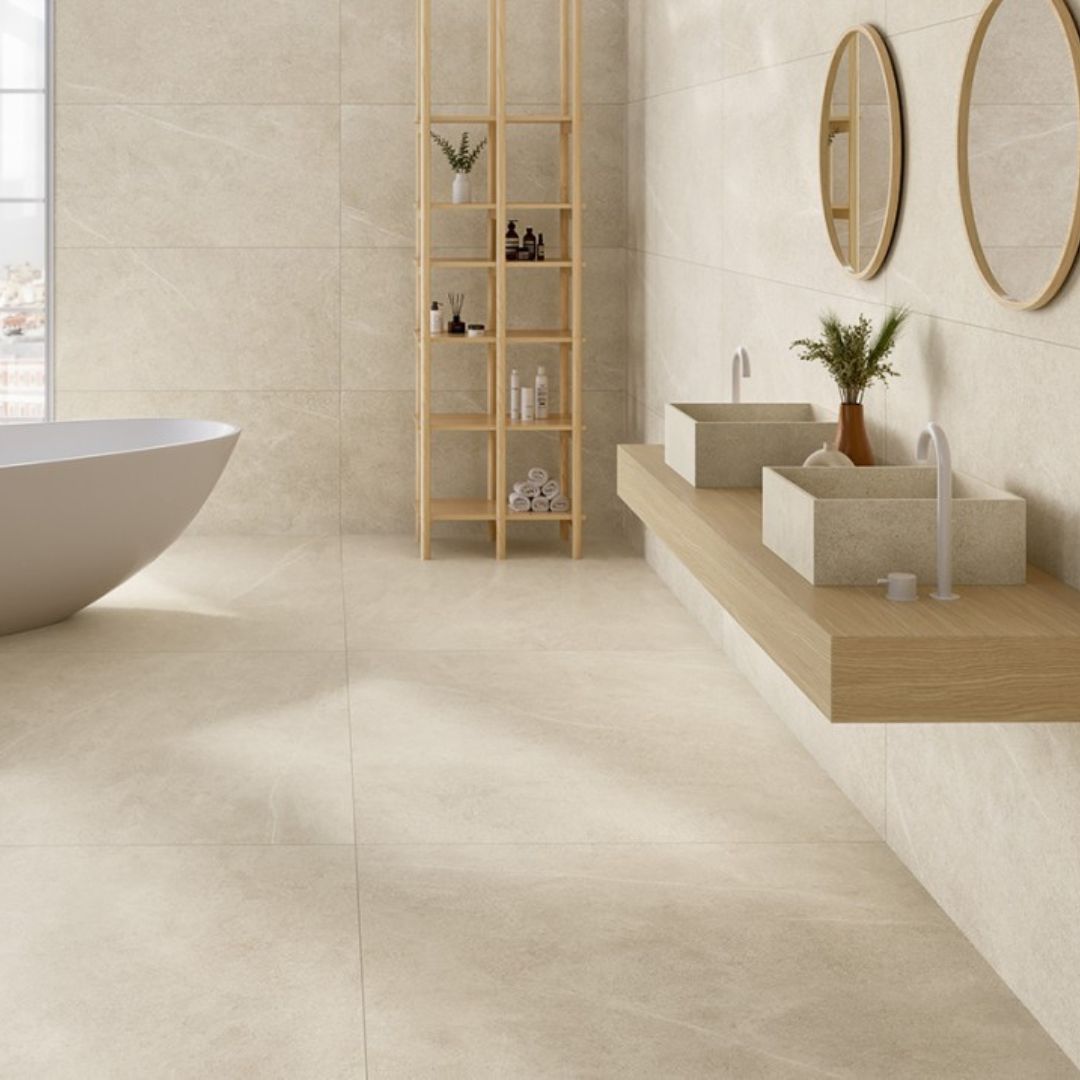
Large-format tiles can make a bathroom feel calmer because there are fewer grout lines breaking up the walls and floor. The colour, veining or stone effect has room to run across a broader surface, which gives the finished design a cleaner appearance.
They are an obvious choice for large bathrooms, but they can work surprisingly well in smaller rooms too. A compact bathroom does not automatically need small tiles. Fewer visible joins may actually make the floor appear less crowded.
Using the same design across the floor and selected walls creates a coordinated look. Alternatively, choose tiles from the same collection in different shades or formats. This provides some variation without making the room feel pieced together.
Large bathroom floor tiles are particularly effective in contemporary and spa-inspired bathrooms. Their simple lines also provide a good background for timber furniture, freestanding baths and statement brassware.
Bear in mind that large floor tiles fro bathroom need a level, thoroughly prepared surface. It is also worth discussing the layout with your installer before work starts. Careful positioning can avoid narrow cuts around doorways, sanitaryware and the edge of the bath.
Small Format Tiles for Character and Detail
Small floor tiles give you more opportunity to introduce pattern, contrast and personality. Their effect comes partly from the tile itself and partly from the grout lines created during installation.
Classic metro wall tiles can be arranged in several ways, including brick bond, herringbone and vertical stack. Brick-effect tiles provide a more textured or rustic finish, while mosaic tiles can bring fine detail to a shower wall or recessed niche.
There is no need to cover every wall. In fact, small wall tiles often have more impact when they are used with restraint. Try them behind the basin, along the side of the bath or on one shower wall. The remaining surfaces can then be kept simpler.
Grout colour will affect the final appearance. A grout that closely matches the tile creates a softer result. A contrasting grout makes every edge more noticeable and brings the layout to the foreground.
Browse small format wall tiles for designs suited to compact walls, splashbacks and feature areas.
Bathroom Floor Tile Ideas
The floor is one of the biggest design decisions in a bathroom. It must cope with water, regular cleaning and daily foot traffic, but it also forms the background to every other item in the room.
When considering tile flooring bathroom ideas, look at how the floor works with the wall tiles, bath, basin and furniture. A strongly patterned floor will usually benefit from simpler surroundings. A quieter floor gives you more freedom to add colour or texture elsewhere.
The following bath floor ideas cover four very different looks, ranging from natural stone to decorative patterns.
Stone-Effect Bathroom Floors
Stone-effect floor tiles can give a bathroom the settled, natural appearance of stone without making the scheme depend on one particular colour. Some designs have soft markings and gentle variation, while others reproduce the more rugged character of split stone.
Stone-effect bathroom tiles work well in spa-inspired bathrooms because they bring an outdoor influence into the room. Pair them with timber furniture, simple white sanitaryware and soft lighting to keep the atmosphere relaxed.
The same stone effect can be continued onto the walls for a more enveloping finish. If that feels too heavy, use it on the floor and repeat it in a shower niche or behind the basin.
Marble-Effect Bathroom Floors
Marble-effect tiles for bathroom can turn the floor into a major feature. Their veining introduces movement, ranging from faint natural markings to bold lines that run across several tiles.
Where the veining is strong, plain wall tiles allow the floor to stand out. Another approach is to continue the same marble effect onto one wall, perhaps behind a freestanding bath or within a walk-in shower.
Marble-effect bathroom tiles suit both classic and contemporary interiors. The overall result depends on what surrounds them. Traditional furniture and polished fittings create a more formal bathroom, while simple units and matt finishes give it a more contemporary feel.
Wood-Effect Bathroom Floors
Timber brings warmth to a bathroom, but real wood needs careful treatment in a damp environment. Wood-effect bathroom tiles provide a practical alternative, combining the appearance of wooden boards with the durability of tiles.
Pale wood effects can soften a white or neutral bathroom. Richer shades sit comfortably alongside green, blue or stone-effect walls. They also provide a useful contrast to glossy sanitaryware and metallic fittings.
The plank format creates further possibilities. A staggered arrangement resembles a conventional wooden floor, while herringbone gives the floor a more decorative character.
Patterned Bathroom Floors
Patterned tiles for bathroom work best when they are allowed to become the focal point. A detailed floor can add character to an otherwise plain bathroom without requiring patterned walls as well.
Patterned bathroom tiles range from traditional motifs to cleaner geometric designs. Victorian-inspired patterns suit period bathrooms and older properties, while bold shapes can give a modern bathroom a stronger identity.
For balance, pick one shade from the floor and repeat it elsewhere. This might be through the wall colour, towels, vanity unit or smaller accessories. Keeping the main wall tiles simple will prevent the different elements from competing.
Of all the available bathroom flooring designs, patterned tiles are among the easiest ways to make the room feel individual. They are also a good starting point if you want nice bathroom flooring but are unsure about introducing a strong colour on the walls.
Shower Tile Ideas
The shower can blend into the rest of the bathroom or become a feature in its own right. Both approaches can work. The choice depends on whether you want a quiet, continuous finish or a clear visual break between the shower and the rest of the room.
These shower tile ideas use changes in format, pattern and texture to give the shower its own character without making it look disconnected.
Create a Shower Feature Wall
A shower wall is a natural place for a feature because it is framed by the enclosure or screen. A contrasting tile can draw attention to the shower and give the bathroom a stronger focal point.
The contrast does not have to come from colour. You could use a different tile shape, a more pronounced texture or a smaller format in a similar shade. This keeps the overall scheme controlled while still distinguishing the shower.
Patterned bathroom tiles can work particularly well on the wall behind the shower fittings. If the pattern is detailed, use quieter tiles on the surrounding walls and floor.
Take the Same Tiles from Floor to Wall
Using one tile across the floor and walls creates a continuous, coordinated appearance. This is particularly effective in walk-in showers and wet rooms, where fewer changes in material can make the bathroom feel more open.
The tiles do not have to be identical. A floor tile and wall tile with a related stone, marble or concrete effect can provide consistency while meeting the practical needs of each surface.
Always check where a tile can be used. A floor tile may often be fitted to a wall, subject to its weight and the wall preparation, but a wall-only tile must not be used on the floor. Shower floors also need suitable grip and careful installation around the drain.
Add Texture with Shower Wall Tiles
Fluted, reeded and structured tiles introduce interest through their surface rather than through a strong colour or pattern. As light falls across the raised areas, it creates shadows that change during the day.
Texture can be used across the main shower wall or restricted to a narrow panel. It is also effective in a recessed niche, where lighting can emphasise the detail.
A structured wall tile usually looks best beside smoother surfaces. Using several heavily textured finishes in one bathroom may make the design feel crowded. One well-placed texture has more impact and is easier to maintain.
Think about cleaning before deciding where to use a deeply structured tile. Raised surfaces may need more attention in areas exposed to soap residue and hard water.
Use Small Format Tiles in the Shower
Small-format tiles are well suited to shower walls because their grout lines bring detail to a relatively contained area. Metro tiles can be stacked, staggered or laid in a herringbone pattern. Mosaics are useful for niches, borders and curved or awkward surfaces.
A matching grout will soften the pattern. Contrasting grout brings attention to the arrangement and creates a more graphic finish.
For a shower floor, select a product specifically suitable for that use. Small floor mosaics can sometimes provide additional grip because of their numerous grout lines, but the individual product specification remains important. The floor must also be prepared correctly so that water runs towards the drain rather than collecting in low areas.
Mix Different Tile Sizes
A bathroom can have contrast without using several unrelated colours. Mixing tile sizes is one of the simplest ways to add variation while keeping the scheme coherent.
For example, large bathroom floor tiles can create a quiet base, while smaller wall tiles add detail behind the basin or around the bath. You could also use large tiles across the main walls and reserve mosaics for the shower.
Try to find a connection between the formats. This could be a shared colour, similar finish or repeated material effect. A large stone-effect floor tile might be combined with smaller tiles in one of the shades found within the stone design.
Two sizes are often enough. Introducing large, medium, small and mosaic formats in the same bathroom can make it difficult to establish a clear focal point.
The position of the changes matters too. Switching format at an architectural feature, such as the edge of a shower, bath or recessed shelf, will look more deliberate than ending it at an arbitrary point.
Experiment with Tile Layouts
You do not always need a different tile to create a different result. The same rectangular tile can look traditional, contemporary or highly decorative depending on how it is laid.
Before installation, place several tiles on a flat surface and test different arrangements. It is much easier to judge the pattern this way than by looking at a single sample.
Herringbone
Herringbone uses rectangular tiles to create a repeated V-shaped pattern. It adds movement and works particularly well behind basins, around baths and on shower feature walls.
Because the pattern already attracts attention, it does not need a strong colour to be effective. A plain tile in a herringbone layout can have just as much character as a patterned design.
Vertical Stack
In a vertical stack, rectangular tiles are placed upright with the grout lines aligned. This arrangement draws the eye upwards and emphasises the wall's height.
It gives familiar metro tiles a cleaner, more contemporary appearance. Use it across a full shower wall or as a narrow panel behind the basin.
Horizontal Stack
A horizontal stack creates straight, orderly rows. It is simpler than herringbone and more structured than brick bond.
The long horizontal lines can make a wall appear wider. This makes the layout useful behind baths and across narrow feature walls.
Brick Bond
Brick bond offsets each row, usually by half the length of the tile. It is the arrangement most closely associated with classic metro tiles. The pattern is familiar and versatile, making it suitable for both traditional and modern bathrooms. A matching grout keeps the result subtle, while contrasting grout highlights the staggered lines.
Chequerboard
Chequerboard floors use alternating square tiles to create a strong geometric pattern. Black and white is the classic choice, but the same layout can be created using softer neutrals or two related shades.
The pattern works particularly well in period bathrooms, although larger tiles and less traditional colours can give it a contemporary feel. Keep nearby wall finishes relatively simple so that the floor remains the focus.
Use Texture to Add Depth
A bathroom does not need several colours to feel interesting. Texture can provide the variation, particularly when the rest of the scheme is deliberately restrained.
Fluted and reeded tiles create regular lines and react noticeably to changes in light. Stone textures have a less uniform appearance and can make a new bathroom feel more established. Structured surfaces sit somewhere between the two, adding detail that becomes more apparent when viewed from different angles.
The difference between matt and gloss also affects the mood of the room. Gloss tiles reflect more light, making colours appear brighter. Matt floor tiles have a softer finish and tend to give stone, concrete and natural designs a more convincing appearance.
Combining finishes can be very effective. A smooth matt floor could be paired with glossy wall tiles, or a fluted feature could sit alongside a plain tile in the same shade.
Use texture where it can be seen and appreciated. Lighting a structured wall from above or beside will reveal far more detail than flat lighting directed straight at it.
Bathroom Tile Colour Inspiration
Colour deserves consideration, but it is only one part of a successful bathroom. Tile size, finish and layout can make the same shade look entirely different.
White tiles provide a fresh background and work with almost any style of furniture or fittings. Shape, texture and grout colour can prevent an all-white bathroom from feeling plain. Explore these white bathroom ideas for further guidance.
Beige and warm neutral tiles create a softer alternative to white or grey. They pair naturally with timber, stone effects and brushed metallic finishes. See these beige bathroom ideas for more examples.
Blue can create a fresh coastal influence or a much darker, more dramatic bathroom. The result depends on the shade and the colours surrounding it. Find more blue bathroom design ideas, or explore colours that work with blue tiles.
Green works particularly well with timber, white sanitaryware and warm metallic fittings. Pale greens create a relaxed atmosphere, while deeper shades make a stronger statement. Our green bathroom design ideas look at these options in more detail.
Find Your Perfect Bathroom Tiles
A well-planned bathroom does not rely on colour alone. Tile size affects the number of grout lines, layout changes how a familiar tile is perceived, and texture brings depth to even the simplest scheme. Start by deciding which surface should attract the most attention. It might be a patterned floor, a marble-effect wall or a textured shower. The remaining tiles can then support that choice rather than compete with it. Most importantly, check that every tile is suitable for its intended wall or floor application. With the practical requirements covered, you can combine formats, finishes and layouts to create a bathroom that feels considered, comfortable and personal.
Leave a Comment
 customerservices@nctilesandbathrooms.com
 Visit our Showrooms


