


How to Measure a Room for Tiling
We often see customers overwhelmed or needing help with measuring their spaces and ordering the correct number of tiles. We understand how the process can seem confusing, but we promise, it’s pretty simple. If you find yourself asking ‘how many tiles do I need?’ read this guide, or use our tile calculator to get accurate results.
This guide explains measurements for both walls and floors and provides both a flooring calculator and wall calculator.
Whether you’re updating a bathroom, kitchen or living area, explore our extensive collection of wall and floor tiles in a wide choice of colours, styles and finishes. Shop All Tiles
What you’ll need
- A tape measure
- The tile calculator (or phone calculator)
- A pen and paper
- A helping hand
- A cup of tea (can’t do DIY without one)
Wastage guide
10% standard wastage, 15% for diagonal layouts, 25% for herringbone layouts.
For large format, we recommend considering an extra allowance than 10%, due to big cuts and alignment.
Tile Calculator
FLOOR TILE CALCULATOR
• 10% standard wastage
• 15% for diagonal layouts
• 25% for herringbone layouts
WALL TILE CALCULATOR
DOORS / WINDOWS / OBSTACLES (mm)• 10% standard wastage
• 15% for diagonal layouts
• 25% for herringbone layouts
Calculated How Many Tiles You Need?
Now it’s time to find the right design. Explore our floor and wall tile collections and use your calculated area to help you order the correct quantity.
Measuring Floors
A standard rectangular room
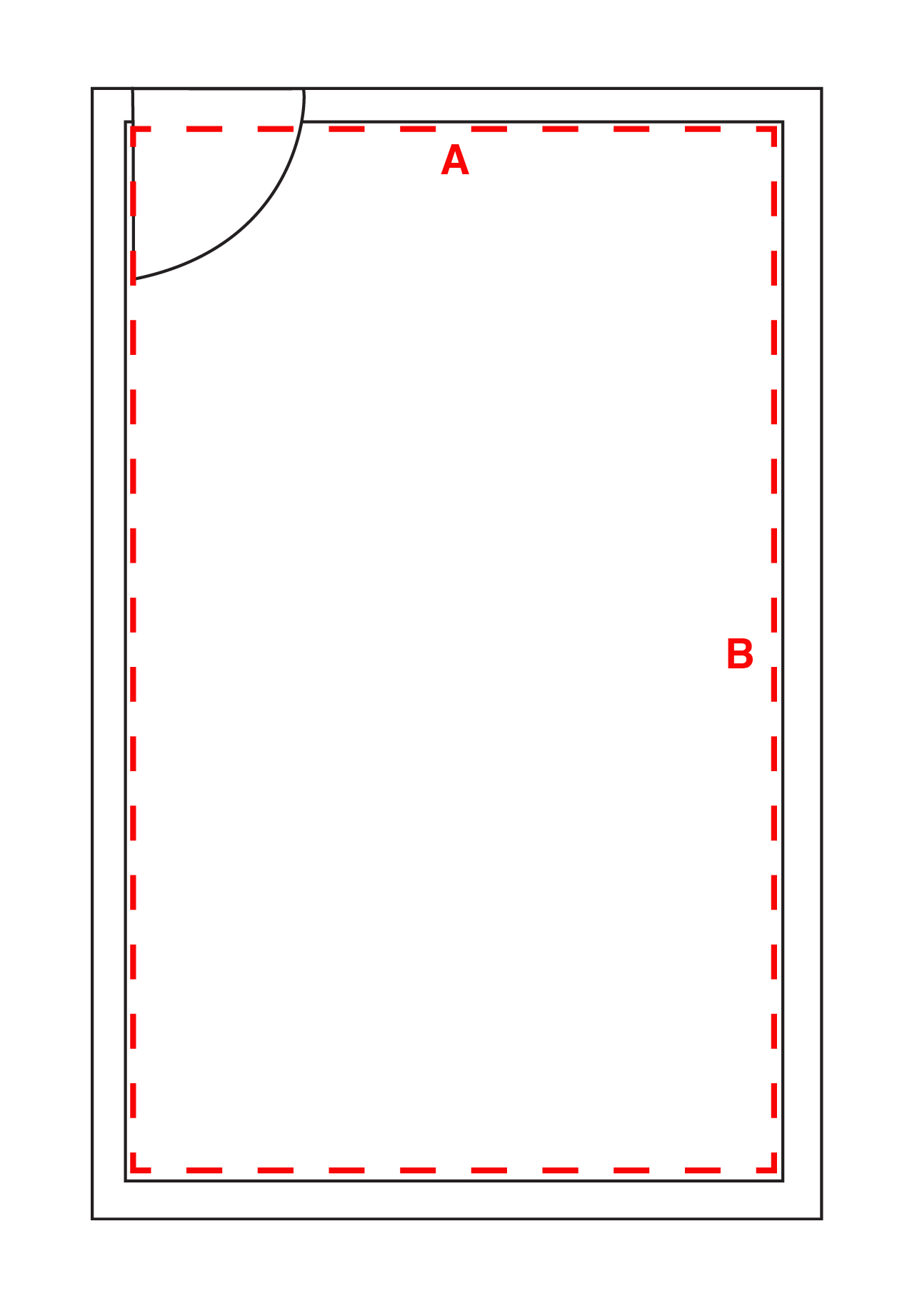
If you’re wondering how to work out square metres (m2) for tiling, look no further.
1. Start by measuring the length of the room, and make a note.
2. Repeat the same with the width of the room.
3. Multiply the two measurements together to get your total square meterage.
This is the exact calculation any square metre or tile estimator calculator would do.
For example
Wall A: 5.6 m
Wall B: 3.2 m
5.6 x 3.2 = 17.92 m2 (18m2 - round up 2 decimal places)
You now need to add in a percentage for wastage, breakages and cuts. Add an additional 10% by multiplying your area by 1.1
18 x 1.1 = 19.8 m2 (20m2 )
This is the number of metres you’ll need to order.
Note: 10% wastage is standard. For diagonal layouts, add 15%, and for herringbone layouts, we recommend 25% wastage.
A more complicated room shape e.g. your bathroom
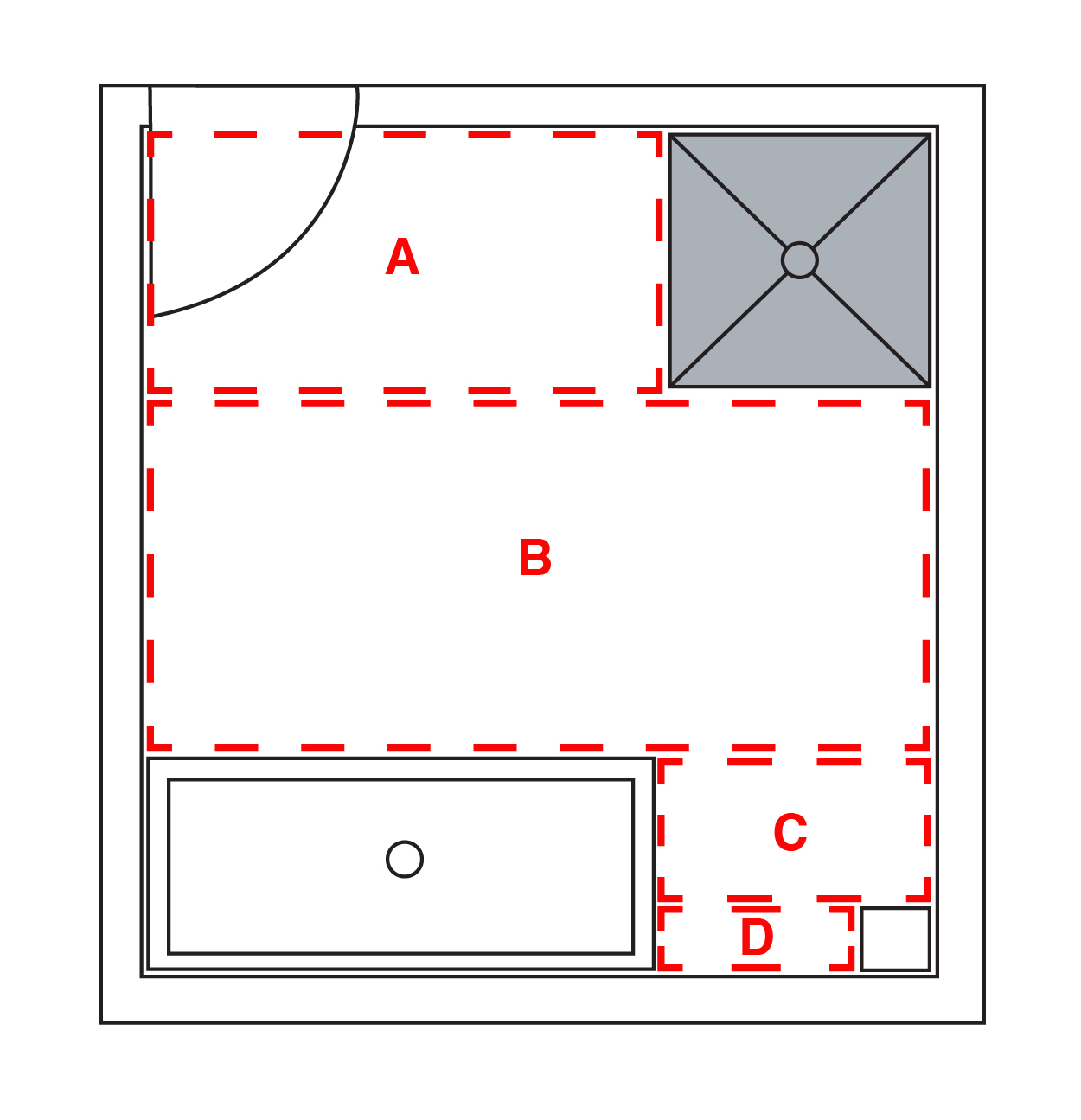
To make measurements far more manageable, divide the room up into smaller rectangles or squares.
1. Draw out your room shape or print out your floorplan. Divide the room up into rectangular or square areas, ensuring all areas are included. Label your individual boxes as 1, 2, 3 or A, B, C.
2. Measure the width and length of each section.
3. Multiply each section's length and width together to figure out their individual square meterage.
4. Add all calculations together to get the total area.
5. Now add 10%. Multiply the total amount by 1.1.
For example
A 1 x 1.92 = 1.92 m2
B 1.3 x 3.2 = 4.16 m2
C 0.60 x 1.28 = 0.768 m2
D 0.30 x 0.64 = 0.192 m2
Add them all together…
1.92 + 4.16 + 0.768 + 0.192 = 7.04 m2
With wastage…
7.04 x 1.1 = 7.744 m2
So… 7.8 m2 needed.
You’ve now finished calculating your floors. Well done!
This method mirrors what a flooring calculator for tiles would give you.
Measuring Walls
Again, if you’re asking yourself, ‘How do I measure for tiles on walls?’ look no further!
Walls are pretty straightforward, too. You’ll need to measure the height and width and subtract areas such as windows or doors.
1. Measure the height and width of each wall.
2. Multiply the height by the width to get the square metres of each wall.
3. Measure the width and height of the window and/or door on that wall
4. Multiply the width and height to get the square metres.
5. Subtract this number from the wall square metre total
6. Multiply by 1.1 to add 10%
For example
Wall Width: 3.2 m
Wall Height: 2.4m
3.2 x 2.4 = 7.68m2
Then multiply the window measurements
Window Width: 915 mm
Window Height: 1200 mm
915 x 1200 = 1,098,000 mm2
1,098,000 ÷ 1,000,000 = 1.098 m2
Now subtract the window area from the wall total.
7.68 – 1.098 = 6.582 m2
Finally, add 10% for wastage
6.582x 1.1 = 7.2402 m2
7.25 m2
Do the same for remaining walls you wish to tile and add each total together.
You’ve successfully measured your tile calculations! If you need any assistance, feel free to call or visit us in store with your drawings. We’re happy to help!
Tile Measuring Mistakes to Avoid
The biggest mistake to avoid is not ordering enough tiles. It’s important to consider wastage.
How much extra tile do you need?
- For standard layout, add 10% wastage.
- For diagonal layouts, add 15%.
- For herringbone, it’s important to add 25% for cuts.
- For large format, we would recommend considering an extra allowance over the standard 10%, due to major cuts and alignment.
FAQ
Q: How do I measure for tiles without a calculator?
A: Measure length x width of each area, add all together to get your square metres and add wastage. For walls, just subtract any windows or doors square meterage from the total area. This method works the same as a tile calculator.
Q: How many tiles do I need per square metre?
A: This depends on tile size. The smaller the tile, the more you are going to need per square metre, whereas the larger the tile, the less you will need. Check out the website’s requirements and coverage details. At N&C Tiles and Bathrooms, you can order in both quantity number and by square meterage, so the exact number will be calculated for you.
Q: How much tile adhesive do I need?
For adhesive, coverage varies. Most adhesives, they will cover 3-5m2 per bag. However, this all depends on the type, thickness, trowel method, substrate, and application area, etc. Always read manufacturers instructions.
Q: What are the most common tile measuring mistakes to avoid?
Not considering wastage. It’s crucial to consider your layout plans and accommodate for this in your wastage percentage. For standard layout, add 10%, with more for large format, for diagonal, 15%, for herringbone, 25%. Adding wastage is crucial for cuts and potential damages. It’s a common mistake to forget this and then have to order more later on; this can cause issues, as batches may differ.
Ready to Start Your Tiling Project?
You’ve measured your space and calculated how many tiles you need — now bring your project to life. Browse our wall, floor and outdoor tile collections to find the perfect option for your space.
 customerservices@nctilesandbathrooms.com
 Visit our Showrooms